

Vibration Analysis in the Semiconductor Industry
By leveraging machine learning, vibration analysis in technical facility management can be significantly enhanced. We have developed a solution that is efficient, rapidly deployable, and cost-effective.
For years, we have been supporting the operation of buildings and equipment for a semiconductor manufacturing client, ensuring minimal disruptions in their technical facility management.
Traditionally, preventive maintenance involved installing various vibration sensors on critical fans and pumps that take periodic measurements. The collected data is analyzed by specialists, who initiate preventive repairs based on detected deviations or changes. However, this approach has a notable drawback: significant issues arising between measurement intervals can go unnoticed, potentially leading to unplanned downtime.
To address this challenge, our team implemented continuous monitoring. They developed an efficient, quick-to-deploy, and affordable solution.
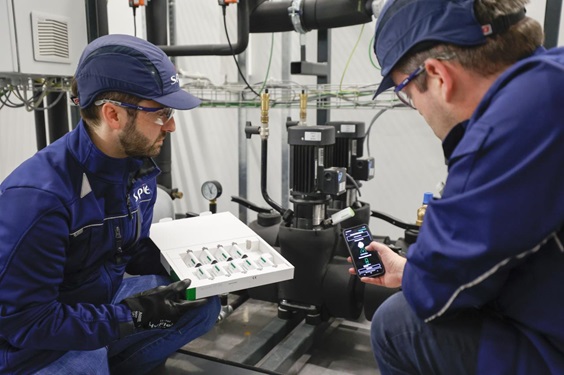
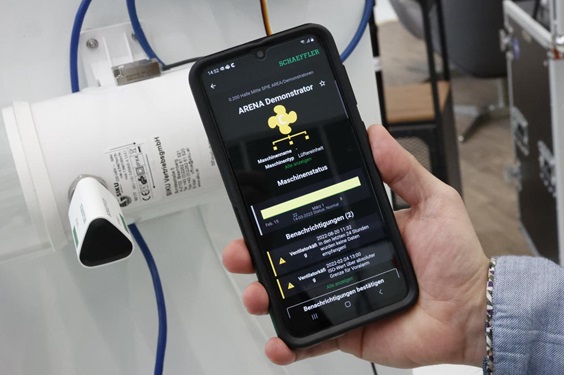
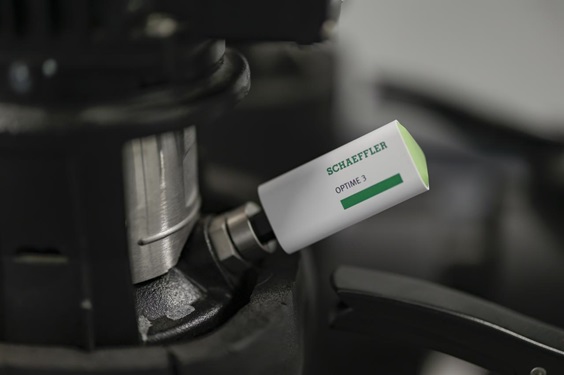
This solution uses sensors equipped with integrated machine learning capabilities, easily affixed to motors and bearings using special adhesive. The system combines battery-powered vibration sensors with robust mesh wireless technology, 4G/LTE gateways, and a cloud-based platform from Schaeffler (the OPTIME system). It performs the majority of data analysis autonomously, adapting through machine learning to each machine’s behavior, enabling much closer monitoring—reducing the measurement interval from several months to four times per day.
Continuous monitoring of vibrations and temperatures allows early detection of potential issues, improving production quality, reducing downtime, and lowering costs. The extensive data collected also facilitates targeted analysis of critical components. Moreover, manual measurements are significantly reduced, generating additional cost savings. Previous projects have also demonstrated savings through optimized lubrication cycles and reduced lubricant consumption.
Following a successful pilot phase involving 20 sensors, the client plans to expand the system to additional equipment. Two expansion phases have already been implemented.



Artikel teilen


Simple implementation
Low acquisition costs
Enhanced monitoring
Significant cost-saving potential

IHR KONTAKT / YOUR CONTACT
SPIE GERMANY SWITZERLAND AUSTRIA

Clarissa Hack
Leiterin / Head of Digital Transformation
clarissa.hack@spie.com