
Our digital solutions are built upon a seamless and robust IT landscape.
Automating and digitizing business processes is a core function of enterprise or ERP software solutions (Enterprise Resource Planning).
The goal is to create a seamless system landscape that minimizes manual interfaces between applications. Information and data should be centrally accessible to all stakeholders without the need for redundant, time-consuming maintenance.
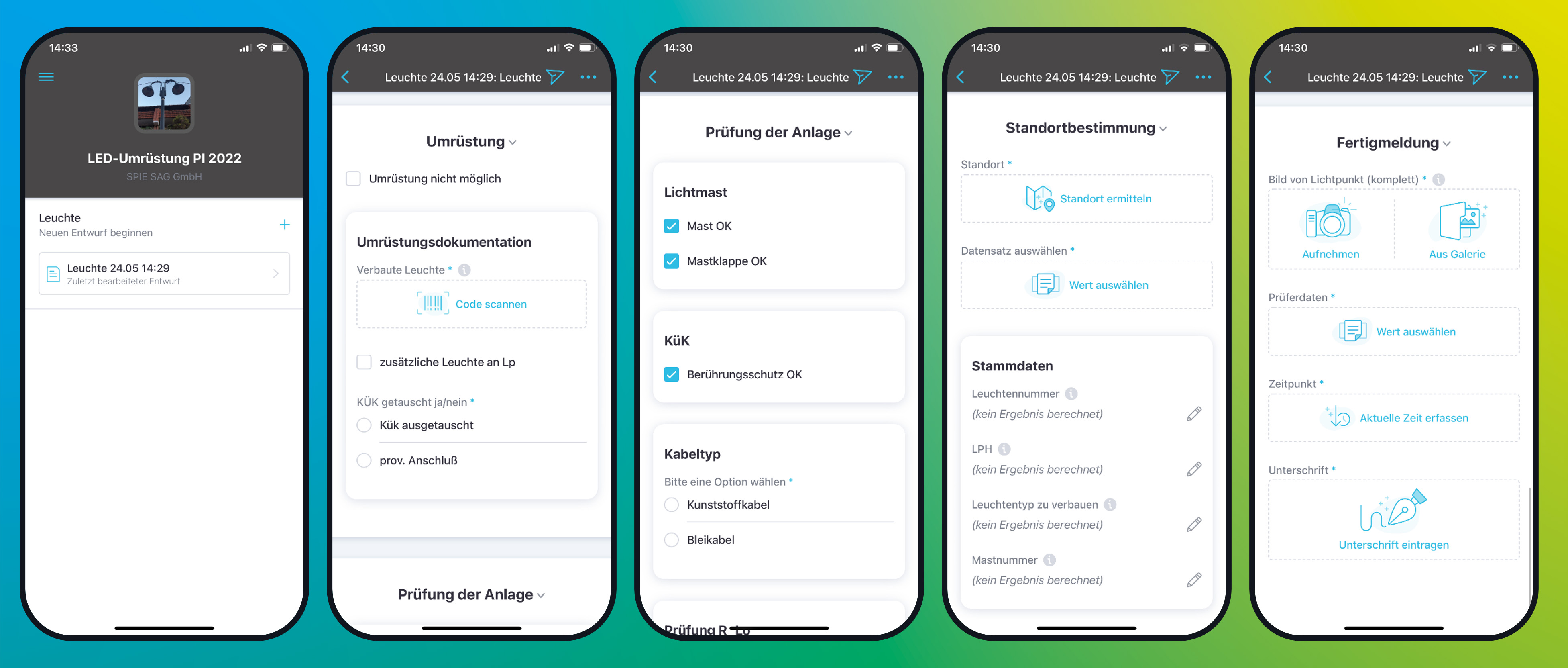
To enable effective consolidation and analysis, data such as checklists or reports must first be captured digitally—for example, via mobile applications. When documents are not available digitally or exist only as PDFs, scan solutions using OCR (Optical Character Recognition) technology can bridge the gap between manual and digital processes.
At SPIE, we already use apps and mobile solutions to handle many documents, such as logging maintenance activities or inspections. External documents like incoming invoices are captured via OCR scanning into our system landscape. Another advantage of digitalized processes is that workflows can be managed automatically: depending on the business case, tasks or information are routed to the relevant employees, or further actions are triggered.


Process digitization forms the foundation for deploying many other digital solutions such as data analytics, AI, smart services, smart contracts, and digital twins.
Carsten Ruffer, Head of IT and Business Process Management, SPIE Germany Switzerland Austria

Before automating or digitizing processes, it is essential to first optimize workflows to ensure maximum efficiency. Only then can processes be effectively digitized to their full potential. Approaches like Lean Management facilitate this value-oriented optimization. By analyzing end-to-end processes across functions, inefficiencies and non-value-adding activities can be identified and subsequently minimized or eliminated through targeted digital solutions.
We are committed to creating a high-quality data foundation through digitized processes. Only with well-structured and accessible data, AI can be effectively applied. Our Data Integration Platform enables intelligent, cross-system analyses. To achieve this, we continuously review how and which data needs to be captured.