

The rapid advancement of robotics presents significant potential for enhancing our services.
Robots are already an integral part of industrial mass production. In service processes, this technology is gaining increasing importance as the physical embodiment of AI: complex, pre-programmed control sequences are being replaced by intuitive teaching methods. These allow operators to easily guide and program the robot through simple manual movements. Furthermore, the use of artificial intelligence provides greater flexibility for robots to perform individualized gripping tasks. In a research project at ARENA2036, AI enabled a robot to successfully grasp previously unknown parts.
The required safety is primarily ensured through proximity sensors or infrared technology. For example, a robot used to load a 3D printer at ARENA2036 was equipped with a sensor jacket. Whenever a person entered the robot’s operating range and thus potentially put themselves at risk, the robot immediately stopped its movement. Thanks to these safety features, the robot can be deployed at an open workstation without the need for additional protective barriers.
These three development trends have prompted us to analyze the use of robots for our services and the associated highly flexible motion sequences.
Robot movements are becoming increasingly customized and flexible.
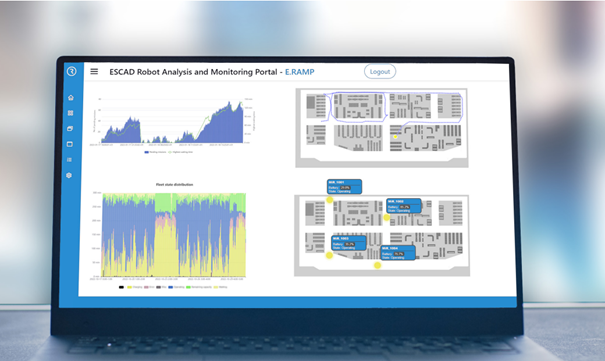
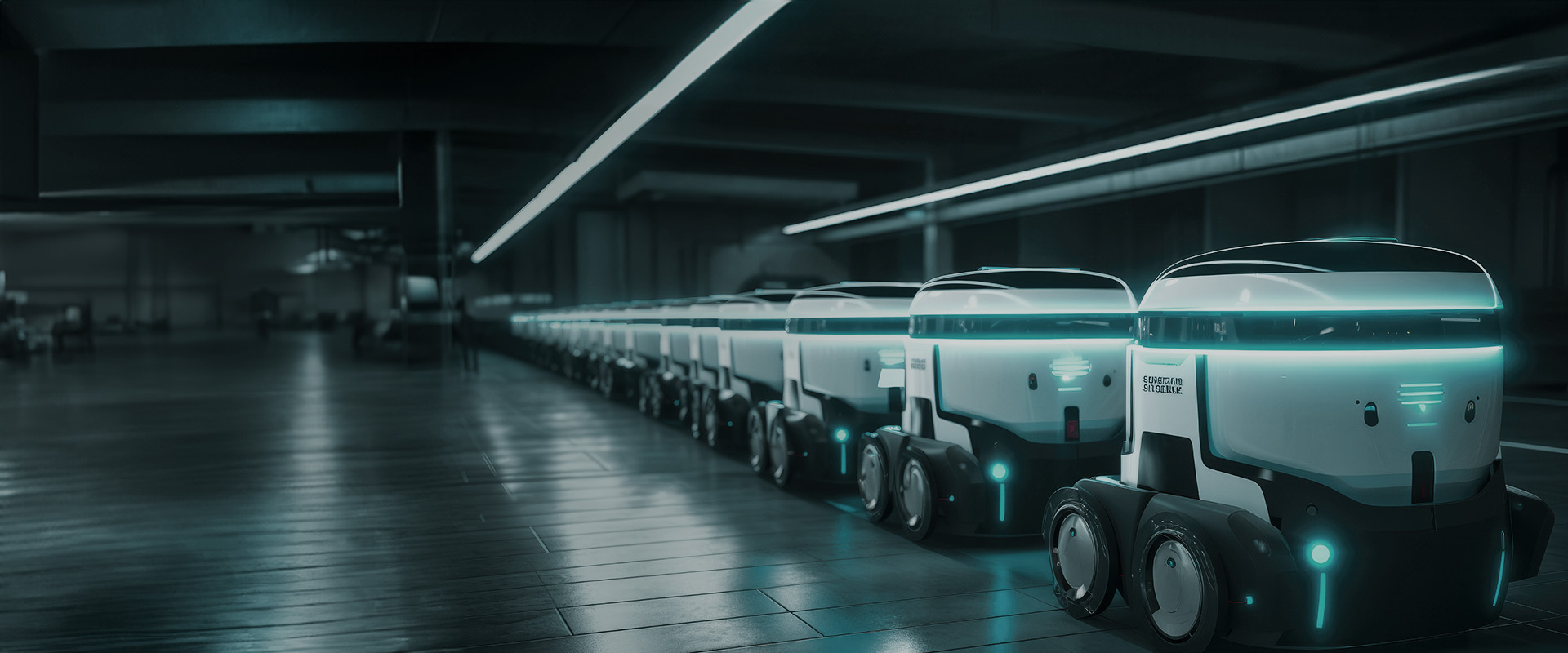
Autonomously driving transport robots, known as AGVs (Automated Guided Vehicles) or AMRs (Autonomous Mobile Robots), are already analyzed and optimized by SPIE for their routing to enable automated and efficient intralogistics solutions for our customers. Sensor and camera data are used by AI for navigation, ensuring that the robots actively avoid obstacles.
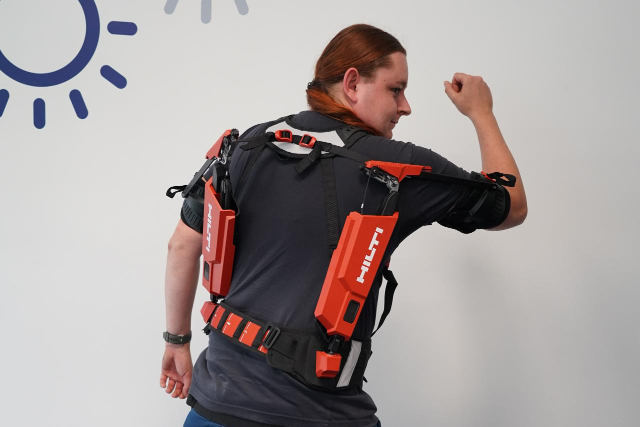
Another way to support physical work through robotics is the use of exoskeletons. These devices provide an external framework to relieve strain on the body while allowing full freedom of movement during demanding tasks such as lifting or overhead work. Although they don’t grant superhuman strength, they significantly ease heavy manual labor. Initial field trials with various exoskeletons have already been conducted, and exoskeletons for overhead work are now being used selectively in maintenance operations.
In addition to mechanical robots, SPIE already leverages software robots to ease administrative tasks. These automate inputs and actions within software applications by mimicking human interactions. This approach helps replace costly and complex system interfaces, enhancing efficiency and reducing operational expenses.
At SPIE, our goal is to support high-risk or unpopular tasks as well as error-prone processes through robotics. To achieve this, we deploy not only physical robots but also software robots using Robotic Process Automation (RPA).