
Comprehensive information serves as the foundation for performance-enhancing solutions.
Smart Services represent the most advanced form of data-driven service offerings, tailored precisely to the needs of our clients and specific situations. By leveraging existing data, they respond proactively to current demands and deliver optimal solutions.
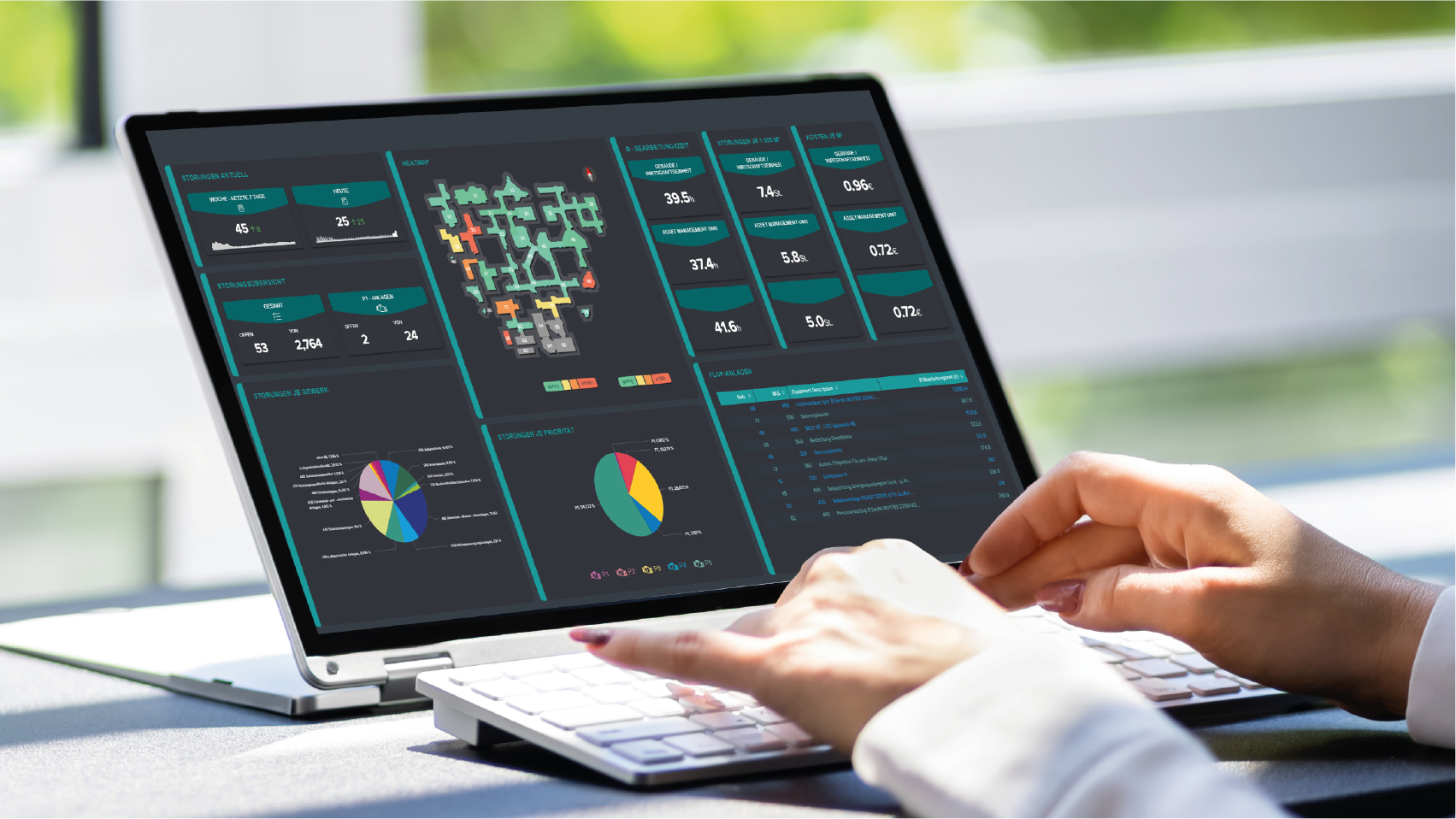
To deliver real added value to our clients, we develop Smart Services based on intelligent data analysis. One example is the evaluation of our maintenance data, which enables us to support customers in making informed investment decisions.
The analysis involves large volumes of data—so-called Big Data—and a high level of complexity. This requires a well-designed structure: our Data Integration Platform. In addition to cross-application analytics, it enables data cleansing and the retrieval of historical records with time stamps. To ensure optimal performance, we draw on both structured and unstructured data within our Data Hub.

Large, complex, fast-moving, and loosely structured data sets often originate from IoT sources. In our Data Hub, they are captured in an unstructured format.
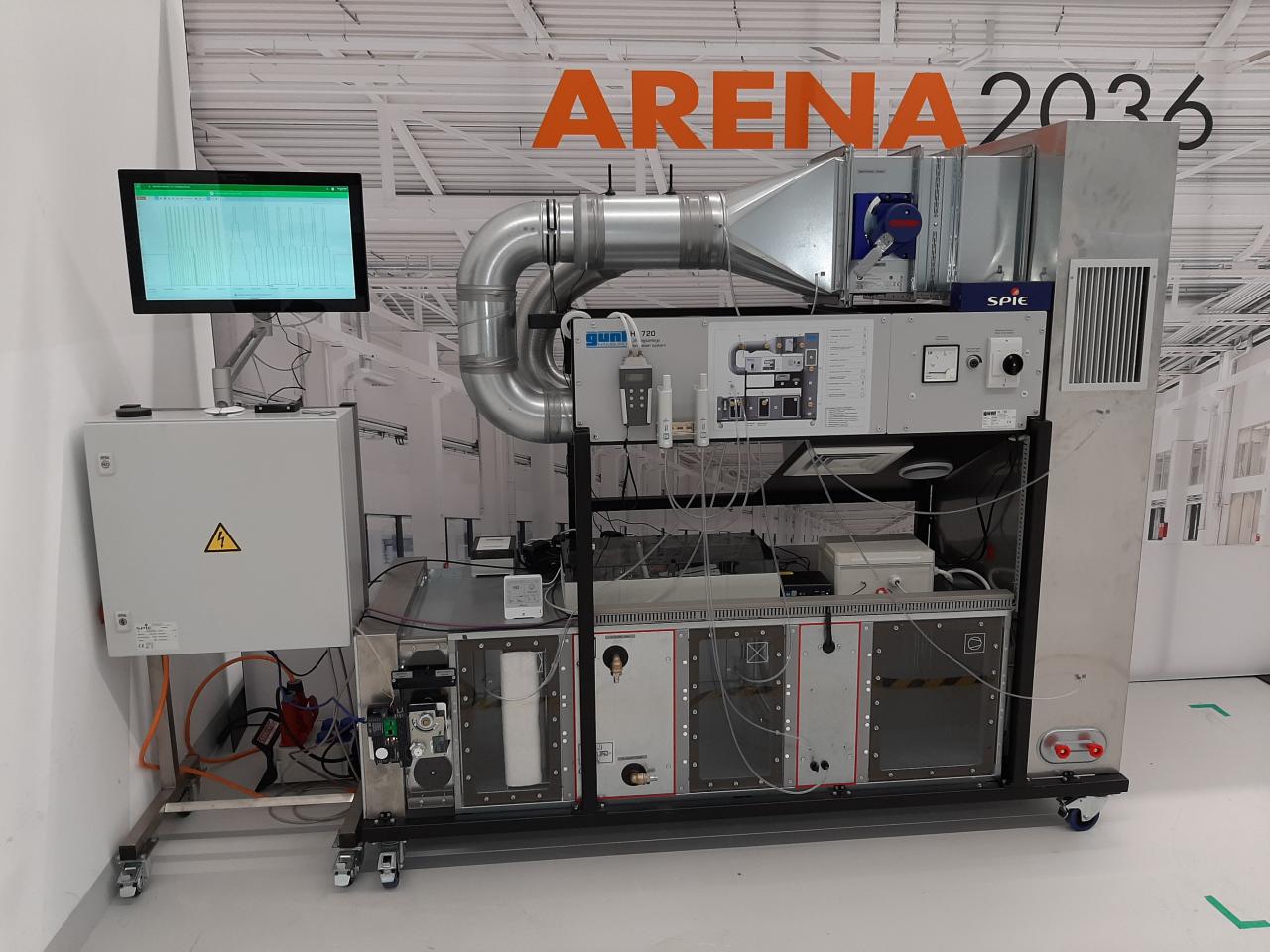
To complement system data with object-specific condition data, we use IoT technologies. With the help of sensors and camera systems, we collect targeted information such as temperature, relative humidity, vibration behavior, or thermal images to detect deviations from normal conditions. This allows us to respond proactively—improving our service quality and increasing efficiency through needs-based actions.
Artificial Intelligence (AI) focuses on the automation of intelligent behavior and machine learning—learning from examples. Big Data forms the foundation for AI. Through continuous machine learning, a knowledge model is created that is essential for mapping decision structures in uncertain environments and solving real-world application challenges. This gives rise to expert systems, pattern recognition, predictive analytics, and robotics. For several years now, we have been developing predictive maintenance algorithms to determine the optimal time for servicing.
With the emergence of generative AI, new possibilities are opening up. This form of AI not only analyzes data but can also generate new content—be it texts, images, or even music. This allows us to create process-oriented assistants that review contracts or documentation, recommend energy efficiency measures, or provide knowledge transfer. Generative AI enables the automation of creative processes and the design of personalized customer interactions tailored to specific needs.
AI solutions are noticeably transforming our lives. They relieve us from routine tasks, increase the reliability of technical systems, and reduce consumption. The degree of intelligence can vary widely across use cases—from minimally automated intelligence with static algorithms, through dynamic learning by users as seen in machine learning, to fully self-learning systems powered by artificial intelligence. At SPIE, we identify application areas across various sectors where AI, and especially generative AI, can deliver significant added value.
The Lünendonk Whitepaper KI contains exciting applications in building operations.
Smart Services: IoT, Data Analytics & AI