

Predictive Maintenance on Air Handling Units


Predictive Maintenance is an innovative maintenance strategy designed to detect potential equipment failures at an early stage and perform maintenance as needed. This proactive approach prevents unplanned downtime and reduces maintenance costs. By leveraging advanced sensor technology and algorithms, it increases system availability and extends the service life of equipment.
As part of our three‑month Innovation & Digitalization (ID) program, we developed a dedicated Predictive Maintenance use case. Vibration and differential pressure sensors were integrated into air handling units. The ARENA2036 provided an ideal testing environment for trialing cutting‑edge technologies. In particular, a specially procured AHU demonstrator was used to showcase the benefits of predictive maintenance. Vibration sensors were mounted directly on the fan motor to continuously monitor oscillations and detect even the smallest deviations that may indicate early‑stage damage.
In addition, differential pressure sensors monitor the pressure levels within the ventilation system’s filters to determine the optimal time for replacement. All sensor data is collected, analyzed, and visualized via the PULSE Core IoT platform. PULSE Core enables the creation of intuitive dashboards, allowing all relevant parameters to be tracked in real time. A dedicated algorithm calculates precise, predictive maintenance dates, which are proactively displayed and updated. An integrated alert system automatically generates notifications whenever defined thresholds are exceeded. In the next stage, these alerts can be seamlessly linked to the CAFM system, enabling automatic generation of work orders.
The project carried out at ARENA2036 resulted in a predictive maintenance solution offering clear, measurable advantages:
Extension of maintenance and filter replacement intervals
Reduction in material consumption and maintenance costs
Increased availability and reliability of equipment
The effectiveness of this approach was validated in a project in the Netherlands across 59 air handling units (AHUs), achieving a return on investment within three to four years. The solution is currently being deployed on a smaller scale with selected clients. Insights and methodologies from this initiative are also being prepared for application to other asset types, such as heat exchangers, cooling systems, and automatic doors. Furthermore, the underlying algorithm will continue to be refined and enhanced in upcoming pilot projects.
Optimized maintenance
Reduced material and labor costs
Minimized downtime
Extended equipment lifespan

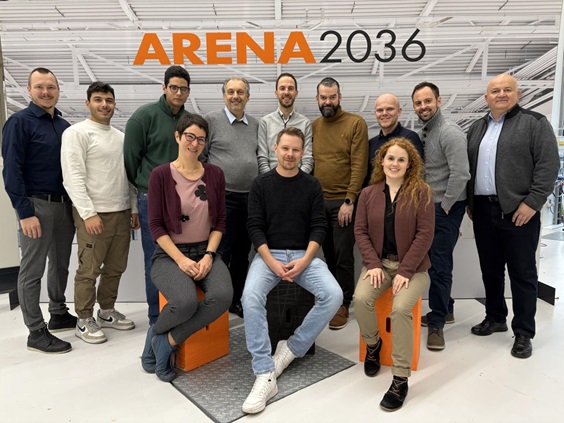
Duration:
September - December 2024
Contact:
Melanie Deckert
melanie.deckert@spie.com
Lutz Krapf
lutz.krapf@spie.com
Stephan Streckwaldt
stephan.streckwaldt@spie.com

Artikel teilen



IHR KONTAKT/ YOUR CONTACT
SPIE GERMANY SWITZERLAND AUSTRIA

Clarissa Hack
Leiterin/ Head of Digital Transformation
clarissa.hack@spie.com