

Automation Enhances Operational Processes in an Oil Refining Facility
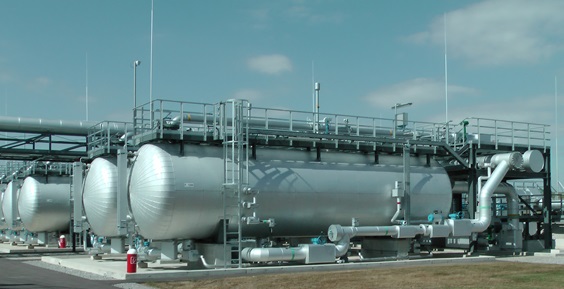
Operator‑Free Plant Operation
Increased Efficiency in Production and Operations
Upgrades During Ongoing Operations
Rapid Deployment
SPIE Automates Oil Manifold to Enable More Efficient and Continuous Operation of Oil Processing Facilities delivering both environmental and economic benefits.
SPIE has successfully automated the oil manifold of an oil processing plant, ensuring optimal pipeline distribution to the separators. In an era of energy transition, it is essential to extract and process fossil resources with maximum efficiency and yield.
The manifold comprises a network of pipes and valves that link the incoming production lines from oil extraction to the separators on the processing level. Each routing point represents a junction where production lines are directed to specific separators as required. The key challenge lay in distributing varying flow rates to the separators in a way that maintains the flow velocities necessary for efficient oil–water separation.
The SPIE engineering team developed an advanced algorithm capable of evaluating and comparing every routing configuration. Manual distribution by operating staff has now been replaced by a highly automated system requiring on‑site personnel only on weekdays. A further challenge was that the existing process control systems had originally been designed for other purposes, and the plant needed to remain fully operational throughout the upgrade. This was successfully addressed by integrating the routing algorithm into a PLC within the control system. To ensure error‑free testing and effective operator training, a simplified digital twin was implemented.
As a result of the manifold’s automation, the plant now operates with significantly higher efficiency, enabling more energy‑efficient extraction and processing of crude oil and natural gas. This not only reduces environmental impact but also ensures uninterrupted production without shutdowns due to operational failures.





IHR KONTAKT/ YOUR CONTACT
SPIE GERMANY SWITZERLAND AUSTRIA

Clarissa Hack
Leiterin/ Head of Digital Transformation
clarissa.hack@spie.com