

AI-Driven Analysis and Documentation of Access Routes for Overhead Power Lines
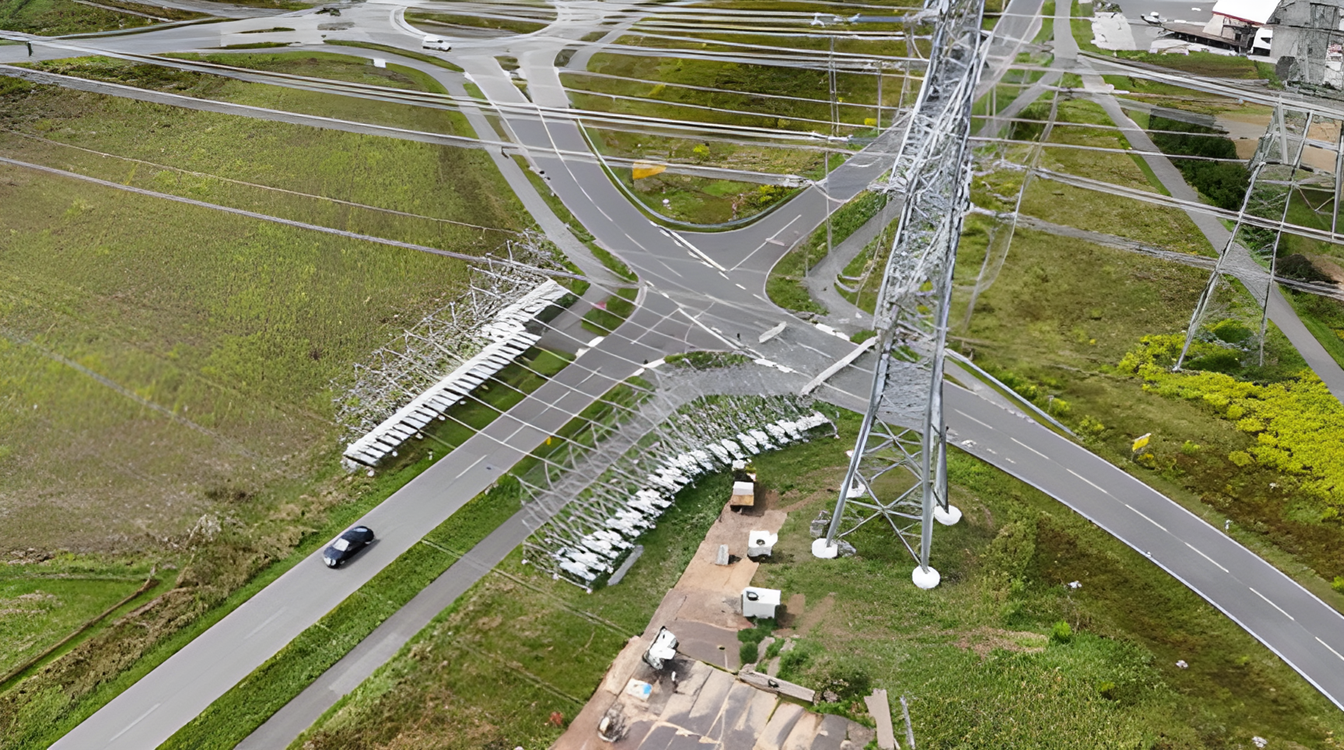
Drones and artificial intelligence are utilized to automate the capture and documentation of access routes on overhead power line construction sites. This approach enhances efficiency, reduces errors, and enables precise quantity measurement.
Temporary access routes, often consisting of gravel paths or steel plates, are commonly installed to support heavy vehicles and equipment during the construction of transmission towers. Manual recording and documentation of these materials is time-consuming and complex, as the number and arrangement of steel plates frequently change throughout the construction phases.
Advanced drone technology captures high-resolution aerial images of the site. These images are then analyzed by AI, which automatically identifies, measures, and counts gravel paths and steel plates. This automated process significantly accelerates data collection while improving accuracy compared to manual methods. Continuous monitoring throughout the construction phase ensures comprehensive tracking of changes and precise documentation of any environmental impacts.
Moreover, real-time monitoring facilitates transparent quantity tracking for clients, suppliers, and asset owners, supporting accurate billing and reporting. By minimizing manual intervention, AI reduces errors and enhances the overall quality of documentation. This innovative solution effectively optimizes construction workflows and substantially increases site productivity.



Improved documentation
Minimized manual tasks
Error reduction
Accurate and efficient billing


IHR KONTAKT / YOUR CONTACT
SPIE GERMANY SWITZERLAND AUSTRIA

Clarissa Hack
Leiterin / Head of Digital Transformation
clarissa.hack@spie.com