

Fire safety system upgrade at RWTH Aachen
Fire safety for university labs
Fire safety is particularly important in public buildings like those at universities, where large numbers of people gather who may not know the buildings, their safety arrangements or escape routes well. In addition, dangerous materials are often used in areas where scientific research is conducted, so there is a greater risk of fire there.
Fire safety plans for specific areas have been drawn up in recent years, and their fire safety systems upgraded. The current modernisation envisages nearly comprehensive coverage that goes well beyond legal requirements. This includes equipping all offices with smoke detectors and additional alarms.
Upgrading during normal operations
The fire detection system in the biology and chemistry buildings at RWTH Aachen is based on multiple levels of parallel protection organised in two main systems and nine subsystems. The plans call for installing up to 60,000 metres of new cabling, 5000 metres of smoke aspiration pipes, some 2400 smoke detectors and for fitting around 130 doors with new closing mechanisms. In addition, there will be around 150 manual fire alarms and more than 350 manual alarms for the building alarm system. North Rhine-Westphalia’s building and property management authority commissioned SPIE to undertake this large-scale project in 2021.
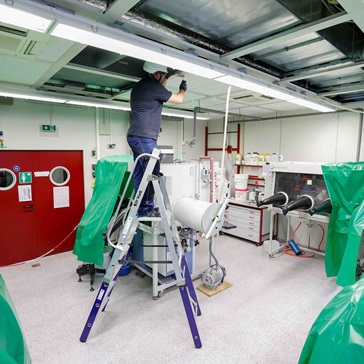
To minimise disruptions to the university’s normal operations during a project of this scale, the upgrade needs to divided into many relatively small stages involving only a few square metres each. For a building’s occupants, that means only small areas need to be vacated at a given time. For those doing the work, on the other hand, it means especially challenging coordination. There is also an additional requirement that the fire detection system has to function and provide complete protection against fire for all occupants at all times even while the work is being performed.
Planning and coordination
Accordingly, a great deal of effort goes into planning, coordination and the building activities. From installing the cabling, the fire safety systems and the safety lighting to cooperating as needed when the original plans must be adjusted, everything has to dovetail seamlessly in order to produce the best results. Coordination among the trades is crucial; as a multi-technical service provider, SPIE can perform much of the work with its own staff but also has access to an extensive network of experienced subcontractors. Even when specially trained professionals are needed for situations like handling hazardous substances, we can call on experts from all over Germany.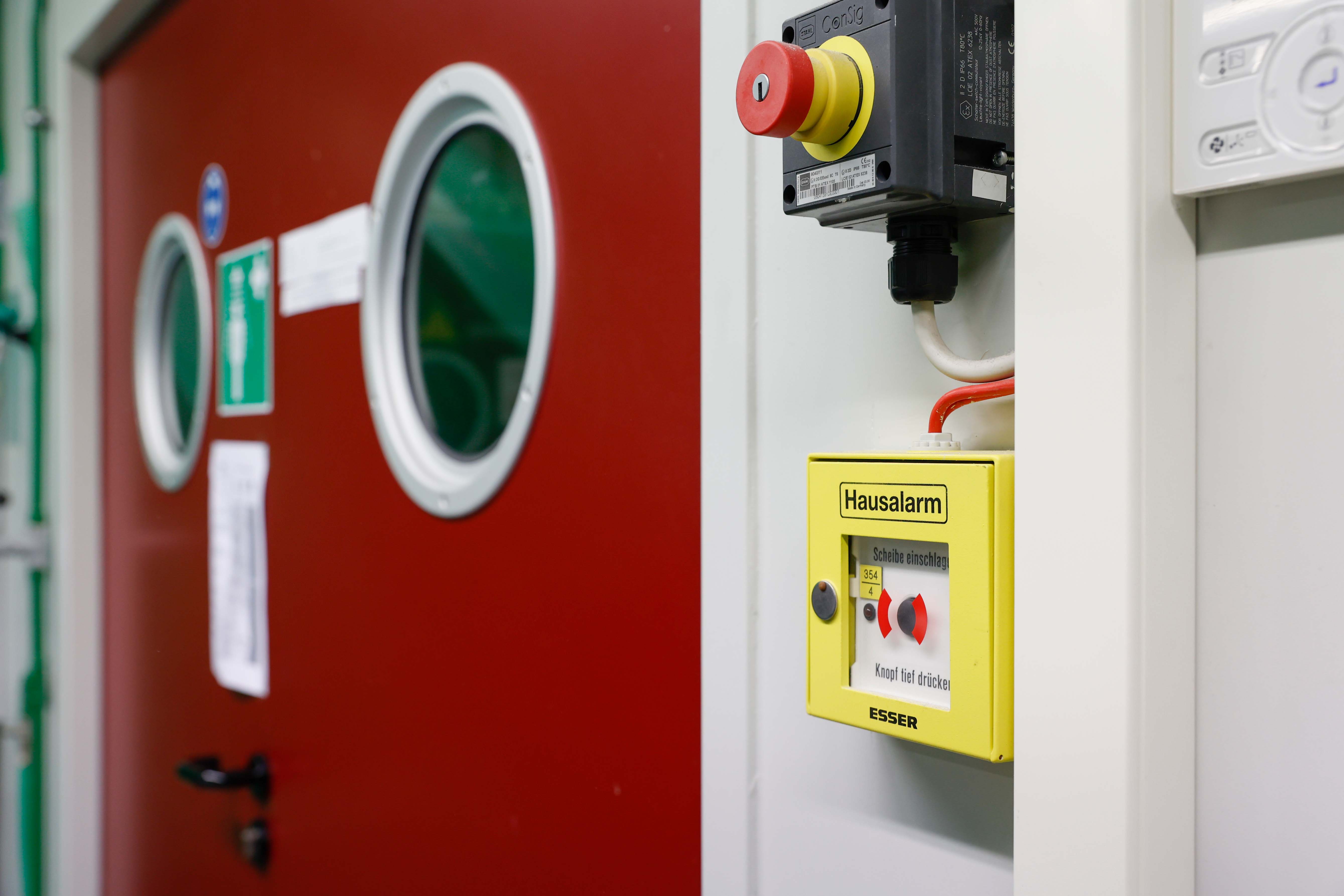
Safety first
Before the new systems can be installed, the as-is situation in each section is assessed and, if necessary, tests run so that the work for each section can be planned as precisely as possible. After a section is inspected, it is blocked off so that work on its upgrade can proceed. Any hazardous materials stored in the laboratories are removed, and sensitive equipment and furniture are covered and properly protected.
A week is planned for setting up and removing the required protective materials and equipment. With an agreed shutdown of five weeks per section, the individual upgrade tasks are limited to a very tightly defined schedule. But no matter how tight the schedule, the safety of the people working on-site always comes first. Even the most painstaking inspection and testing of a building cannot rule out unforeseen surprises like live cable ends in false ceilings. This is where the project benefits from the entire team’s experience and expertise.
Constructive cooperation
The upgrade of the fire detection system in the chemistry and biology buildings at RWTH Aachen is an especially demanding project in terms of both the customer’s planning and the service provider’s implementation, so constructive and pragmatic cooperation on the part of all involved parties is crucial in dealing quickly with any unexpected challenges.
This is a condensed version of a longer article that was published in the German trade journal Der Bauschaden.